
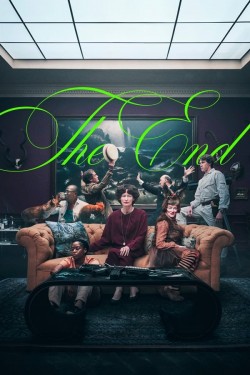
The End (2024) – Complete Review – Zvideo
The End (2024) is a stunning exploration of the human psyche, set in a dystopian world where the line between reality and fantasy blurs. Directed by a visionary filmmaker and starring an incredible cast, this British-Danish-German-Irish-Italian-Swedish production stands as a testament to the growing power of international collaborations in the cinematic world. Released on December 6, 2024, the film is a unique blend of drama, fantasy, and science fiction, offering a fresh perspective on what happens when a perfect world is shattered by an unknown force.
In this comprehensive review, we will delve into the story, the characters, the themes, and the performances that make The End a memorable cinematic experience. With a stellar cast that includes Tilda Swinton, Bronagh Gallagher, Tim McInnerny, Lennie James, and Moses Ingram, this film presents a narrative that challenges conventional storytelling.
Plot Overview: A World on the Brink
The story of The End is set in a luxurious underground compound that has been isolated from the rest of the world. The family living there enjoys a life of wealth, comfort, and seemingly perfect existence. However, this illusion of perfection is shattered when a stranger suddenly arrives, bringing with them a sense of danger and uncertainty.
At the heart of the story is the Son, who begins to question the reality of their existence. What appeared to be a flawless life turns out to be fraught with complexities and hidden truths. The arrival of the stranger forces the family to confront their own fears and insecurities, and the Son embarks on a journey of self-discovery that will forever change their perspective on life.
As tensions rise within the family and the stranger’s motives become clearer, the film explores themes of identity, isolation, and the consequences of living in a controlled, artificial environment. The once-untouchable world of the underground compound begins to unravel, and the characters must confront the darkness lurking beneath their perfect facade.
Themes: Identity, Isolation, and Perfection
One of the central themes of The End is the exploration of identity. The characters are forced to examine who they really are when their carefully constructed world begins to fall apart. The Son, in particular, struggles with their sense of self as they are confronted with the harsh realities of the outside world. The film poses the question: Can one truly know themselves when they have been isolated from the world for so long?
Isolation is another key theme in the film. The underground compound, although luxurious, represents a kind of self-imposed exile from the outside world. The family’s isolation allows them to live in a bubble of comfort, free from the challenges and complexities of the world above. However, this isolation comes at a cost, as they are unable to fully understand the world around them and are unprepared for the arrival of the stranger.
Perfection, too, is a central concept in the film. The family’s life in the compound seems perfect on the surface, but as the stranger’s arrival shows, perfection is often an illusion. The characters must grapple with the idea that their idealized version of life may not be as perfect as they once believed, and that true fulfillment may lie beyond the confines of their self-imposed paradise.
Characters: Complex and Intriguing Performances
The characters in The End are multi-dimensional, each with their own personal struggles and motivations. The performances from the cast, particularly Tilda Swinton, bring these characters to life in a way that makes them feel real and relatable.
The Son (played by Moses Ingram)
The Son is the central character of the film, and their journey forms the emotional core of the story. Played by the talented Moses Ingram, the Son is initially portrayed as a passive observer in the world of the underground compound. However, as the stranger’s arrival disrupts their sense of security, the Son begins to question the world they have always known. Ingram brings a sense of vulnerability and curiosity to the role, making the Son’s emotional journey both compelling and relatable.
The Stranger (played by Tim McInnerny)
Tim McInnerny’s portrayal of the Stranger is both enigmatic and unsettling. The Stranger’s sudden appearance challenges the family’s entire way of life, and McInnerny masterfully conveys the character’s mysterious and sometimes dangerous nature. As the film progresses, the Stranger’s motives become clearer, and McInnerny’s performance takes on a darker, more intense edge. The Stranger serves as both a catalyst for the narrative and a symbol of the outside world that the family has long ignored.
The Mother (played by Tilda Swinton)
Tilda Swinton’s performance as the Mother is nothing short of extraordinary. She brings a sense of authority and control to the character, but as the story unfolds, we see the cracks in her composure. The Mother’s unwavering belief in the perfection of their life is challenged by the Stranger’s presence, and Swinton does an excellent job of conveying the character’s internal conflict. Her ability to portray both strength and vulnerability adds layers to the character and enhances the emotional impact of the film.
The Father (played by Lennie James)
Lennie James plays the Father, a man who is caught between maintaining the family’s sense of order and confronting the inevitable changes brought about by the Stranger. James brings a grounded intensity to the role, portraying a father who is protective of his family but also deeply conflicted about the world they have created. His performance adds a sense of gravity to the narrative, making the Father a key player in the unfolding drama.
The Daughter (played by Bronagh Gallagher)
Bronagh Gallagher plays the Daughter, a character who provides a contrast to the Son. While the Son is questioning their existence, the Daughter seems to be more content with their life in the compound. Gallagher’s performance is subtle yet powerful, capturing the complexities of a character who is torn between loyalty to their family and the desire for something more.
Visual and Cinematic Style: A Stunning World
The visual style of The End is one of its most striking features. The film’s underground compound is a stunning creation, filled with luxurious and surreal imagery that reflects the artificial nature of the family’s existence. The cinematography, by a talented team of filmmakers, uses lighting and framing to create a sense of claustrophobia, highlighting the characters’ isolation from the outside world.
The contrast between the sterile beauty of the underground world and the rugged, chaotic world outside is stark, and the film uses this visual dichotomy to emphasize the themes of isolation and the tension between perfection and reality. The world-building in The End is intricate, and the attention to detail creates a fully immersive experience for the viewer.
The film also makes use of fantasy and science fiction elements, weaving them into the narrative in a way that feels organic rather than forced. The blending of these genres adds an element of unpredictability, as the audience is never quite sure what will happen next. The film’s pacing is deliberate, allowing the tension to build slowly as the characters confront the unknown.
Soundtrack and Score: Enhancing the Atmosphere
The soundtrack of The End plays a crucial role in enhancing the film’s atmosphere. The music, composed by a talented team of musicians, is haunting and ethereal, mirroring the eerie and otherworldly nature of the underground compound. The score also shifts in tone as the film progresses, heightening the tension and adding to the emotional weight of the story.
The use of sound design is equally effective, with subtle noises that create a sense of unease and tension. The film’s soundscape is immersive, drawing the audience into the world of The End and amplifying the sense of claustrophobia and impending danger.
The Film’s Symbolism: What Lies Beneath
The End is filled with rich symbolism that adds layers of meaning to the narrative. The underground compound itself serves as a metaphor for the characters’ emotional and psychological isolation. It is a place of comfort and luxury, but also a prison that prevents the family from engaging with the outside world. The Stranger, too, is symbolic of the forces of change and disruption that the family has been trying to avoid.
The film’s title, The End, is itself symbolic, representing not just the literal end of the family’s world as they know it, but also the end of their illusions and the beginning of a new, more uncertain reality. The Son’s journey represents the end of innocence and the confrontation with harsh truths.
Conclusion
The End (2024) is a bold and thought-provoking film that challenges audiences to examine their own perceptions of reality, identity, and perfection. The film’s stunning performances, intricate world-building, and thought-provoking themes make it a standout in the genre of drama, fantasy, and science fiction.
With a star-studded cast that includes Tilda Swinton, Bronagh Gallagher, Tim McInnerny, Lennie James, and Moses Ingram, the film offers a powerful and emotionally resonant story that will linger long after the credits roll. The End is a film that invites viewers to question what they know about themselves and the world around them, making it a must-watch for fans of thought-provoking cinema.
Related Article

Angel of Beggars 2025 – Complete Review – Zvideo

Fragile Heart 2022 – Complete Review – Zvideo