
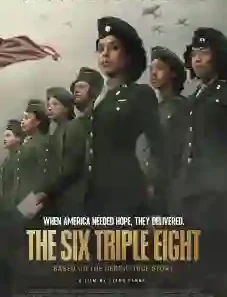
The Six Triple Eight (2024) – Complete Review – Zvideo
The Six Triple Eight (2024) is a compelling drama that delves into the lives of the 6888th Central Postal Directory Battalion, the only all-black, all-female battalion to serve overseas during World War II. Directed by Tyler Perry, the film brings to light a lesser-known chapter of history, focusing on the courage, resilience, and perseverance of these women who overcame prejudice and hardship to serve their country. The film stars Kerry Washington, Ebony Obsidian, and Milauna Jackson, delivering a powerful narrative of loss, friendship, and the fight for dignity. This complete review will provide a detailed analysis of the film’s storyline, characters, performances, historical context, and overall impact.
Overview of the Story
Set against the backdrop of World War II, The Six Triple Eight follows the story of Lena (Kerry Washington), a young woman from Pennsylvania who is deeply in love with Abram, a man preparing to serve as a pilot in the war. As the war progresses, Lena’s life takes an unexpected turn. She eagerly anticipates Abram’s return, but tragically learns of his death a year after his deployment. Devastated by this loss, Lena is motivated to enlist in the military herself, determined to contribute to the war effort and honor Abram’s memory.
Lena’s journey leads her to join the 6888th Battalion, where she comes under the guidance of Major Adams (Ebony Obsidian). As Lena faces the hardships of military life, she struggles with the emotional weight of losing Abram and is haunted by visions of him. However, Lena finds solace in her fellow recruits, including Johnnie, Bernice, Dolores, and Elaine, who become her sisters in arms. Together, they navigate the challenges of their training, forging deep bonds of friendship and solidarity.
While Major Adams is committed to serving her country, she must also contend with the pervasive racism within the military. High-ranking officials like General Halt (a figure who embodies the prejudice of the time) oppose the unit’s deployment and make it clear that they view these women as inferior. Despite these obstacles, the women of the 6888th refuse to be deterred. They work tirelessly to ensure that the soldiers’ mail is delivered, a vital task that helps boost the morale of troops stationed overseas.
Historical Context: The Real Story Behind The Six Triple Eight
The 6888th Central Postal Directory Battalion, known as The Six Triple Eight, was the only all-black, all-female battalion to serve in Europe during World War II. Their mission was critical to the war effort: they were tasked with sorting and delivering backlogged mail to American soldiers in France, a task that had previously been delayed for months due to the chaos of the war. The battalion was deployed to France in 1945, where they worked under challenging conditions, sorting over 17 million pieces of mail in just three months.
The unit’s formation was part of a broader effort by the U.S. military to integrate women and African Americans into the war effort. While the military was still largely segregated and women were largely relegated to support roles, the 6888th proved that both African American women and women in general were more than capable of contributing to the success of the war effort. The battalion was instrumental in maintaining communication between soldiers and their families, an emotional lifeline during a time of intense hardship.
The film takes creative liberties with the details of the story but remains true to the essence of the 6888th’s mission and the racial and gender prejudices they faced. The historical accuracy of the film, particularly the portrayal of the battalion’s challenges and triumphs, is a testament to the courage of these women, who were often overlooked by history but played an essential role in the war.
Character Development and Performances
Lena (Kerry Washington)
Kerry Washington’s portrayal of Lena anchors the film emotionally. Lena’s character is defined by her deep love for Abram and the pain she endures following his death. Washington captures the vulnerability and determination of a woman who, despite her grief, is motivated by a sense of duty and a desire to honor her lost love. As Lena navigates her military service, Washington masterfully conveys the inner conflict of a woman who is both haunted by the past and driven by the need to make a difference.
The scenes where Lena confronts her memories of Abram are particularly moving. Washington brings a raw emotional intensity to the role, showcasing Lena’s struggle with loss, trauma, and the desire to push forward. Her interactions with her fellow recruits, particularly with Major Adams, show Lena’s growth as she moves from a young woman devastated by her personal losses to a confident and resilient member of the battalion.
Major Adams (Ebony Obsidian)
Ebony Obsidian’s portrayal of Major Adams is a standout in the film. As the leader of the 6888th, Major Adams is a strong and inspiring figure who understands the weight of her responsibility. She is not only guiding the women through their military training but also leading them in the fight against the racial prejudices that permeate the military. Obsidian brings both authority and compassion to the role, showing Major Adams as someone who is deeply committed to her duty but also deeply aware of the societal barriers that the women face.
Major Adams serves as a mentor to Lena and the other recruits, offering wisdom and guidance. Her character’s emotional depth is revealed in moments of vulnerability, especially when she faces the challenge of leading a battalion of women in the face of systemic racism and opposition from her superiors. Obsidian’s nuanced performance makes Major Adams one of the most compelling characters in the film.
The Other Recruits (Ebony Obsidian, Milauna Jackson, and Kerry Washington)
The camaraderie among Lena’s fellow recruits—Johnnie (Milauna Jackson), Bernice (Ebony Obsidian), Dolores (played by an undisclosed actress), and Elaine (another character played by an undisclosed actress)—adds another layer of emotional depth to the story. These women form a close-knit sisterhood, providing each other with support and solidarity in the face of the adversity they encounter. Each character represents different aspects of the women’s experiences, from the challenges of racism and sexism to the bonds formed through shared hardship.
Their collective journey serves as a counterpoint to Lena’s personal struggle, highlighting the power of friendship and unity in times of crisis. The performances of Jackson, Obsidian, and others are heartfelt and authentic, capturing the essence of the women’s experiences and the strength they draw from each other.
General Halt and Racism in the Military
The character of General Halt (played by a supporting actor) serves as a representative of the entrenched racism and discrimination that the women of the 6888th faced within the military. Halt is portrayed as a figure who is dismissive of the women’s abilities and doubts their value to the war effort. His character exemplifies the prejudiced attitudes of the time, and his interactions with Major Adams and the recruits highlight the systemic racism they had to overcome.
The film does an excellent job of showing how these women fought not only for the recognition of their work but also for their right to serve in a world that often saw them as inferior. General Halt’s opposition to the 6888th’s mission is a stark reminder of the prejudices that existed within the military and the larger society.
Cinematic Elements: Direction, Screenplay, and Visuals
Direction by Tyler Perry
Tyler Perry’s direction of The Six Triple Eight is both sensitive and powerful. Known for his skill in creating emotionally resonant stories, Perry brings his trademark emotional depth to the film. He handles the sensitive topics of grief, racism, and military service with care, ensuring that the characters’ emotional journeys are at the forefront of the narrative. Perry’s direction also emphasizes the historical significance of the 6888th, highlighting the battalion’s role in the war while remaining focused on the human stories of the women involved.
The pacing of the film is deliberate, allowing for moments of reflection and emotional connection. Perry balances the action of military training with quieter, more intimate scenes that explore the characters’ inner lives. The emotional weight of the story is never lost, and the film’s focus on the relationships between the women ensures that it remains grounded in the human experience.
Screenplay by Kevin Hymel and Tyler Perry
The screenplay, co-written by Kevin Hymel and Tyler Perry, is well-crafted, striking a balance between historical accuracy and dramatic storytelling. The dialogue feels authentic, capturing the language and tone of the time, while also staying true to the emotional arcs of the characters. The screenwriters do an excellent job of highlighting the struggles and triumphs of the women of the 6888th, while also showcasing the complex dynamics between them and the men in power.
The film’s script does a remarkable job of portraying the 6888th’s accomplishments and the significance of their mission, ensuring that their contributions are not overshadowed by the larger historical narrative of the war. It also highlights the challenges faced by these women, allowing their individual stories to shine.
Visuals and Cinematography
The cinematography in The Six Triple Eight is stunning, with sweeping shots of military landscapes and intimate close-ups that focus on the characters’ emotions. The contrast between the harsh conditions of the military camp and the tenderness of the women’s interactions enhances the emotional depth of the film. The film also uses color and lighting to convey the mood of each scene, from the bright, hopeful moments to the darker, more somber ones.
The production design also plays a significant role in immersing the audience in the time period. The sets, costumes, and props all reflect the era of World War II, adding authenticity to the story. The attention to detail in the film’s visual design helps create a strong sense of place and time, allowing the audience to fully engage with the historical context.
Themes and Impact
Race and Gender
One of the most powerful themes explored in The Six Triple Eight is the intersection of race and gender. The women of the 6888th face double discrimination—both as African Americans and as women. The film does an excellent job of illustrating the barriers they had to overcome, both within the military and in society at large. Their perseverance and courage in the face of such adversity make their accomplishments all the more remarkable.
Friendship and Solidarity
The film also highlights the importance of friendship and solidarity among the women of the 6888th. As they face the challenges of military life and the prejudice of their superiors, they find strength in each other. Their bonds of sisterhood become a source of empowerment, helping them navigate the hardships they encounter.
The Power of Memory and Legacy
Another significant theme in the film is the power of memory and legacy. Lena’s journey is shaped by her memories of Abram, and through her service in the military, she seeks to create a legacy that honors his sacrifice. The film reminds us that history is often shaped by the quiet, unrecognized contributions of individuals, and it is through remembering these contributions that we honor those who came before us.
Conclusion
The Six Triple Eight is a powerful and emotional film that brings to light an important chapter in history. The performances of Kerry Washington, Ebony Obsidian, and the supporting cast are exceptional, and Tyler Perry’s direction ensures that the film resonates on an emotional level. The film’s exploration of race, gender, friendship, and legacy offers a poignant reflection on the challenges faced by the women of the 6888th and their determination to overcome them.
With its compelling story, strong performances, and historical significance, The Six Triple Eight is a film that deserves recognition not only for its portrayal of these unsung heroes but also for the way it highlights the ongoing struggles for equality and recognition. This film is an important tribute to the women who served in the 6888th and a reminder of the power of perseverance in the face of adversity.
Related Article

Mary Cassatt: Painting the Modern Woman 2023 – Complete Review – Zvideo
The Mollie Project 2025 – Complete Review – Zvideo
